
The Course of Treatment, Not Just the Next Visit
Lay out what a client needs across several appointments, with what each part costs and what has been paid. A long treatment becomes a plan rather than a series of surprises.
Start NowHow It Works
Build a plan from the work a client needs, with a title and a due window per item
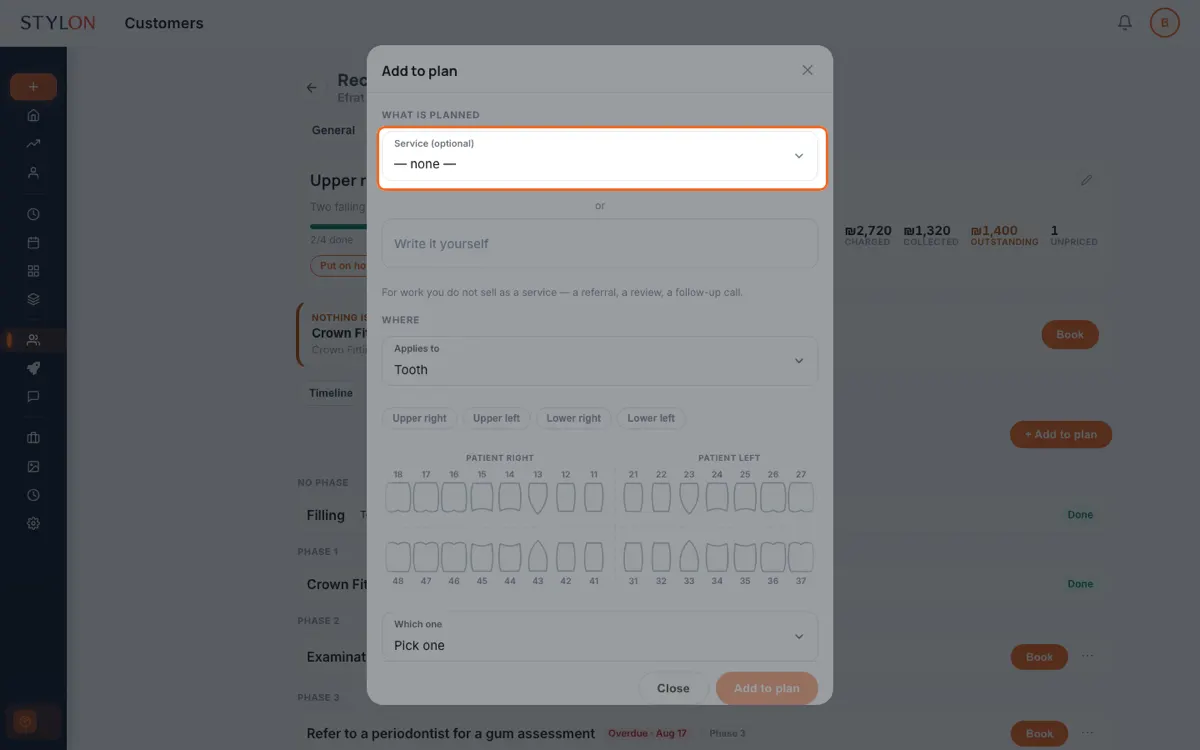
Each item can point at a tooth or a body area, so "crown on 26" is a scheduled piece of work
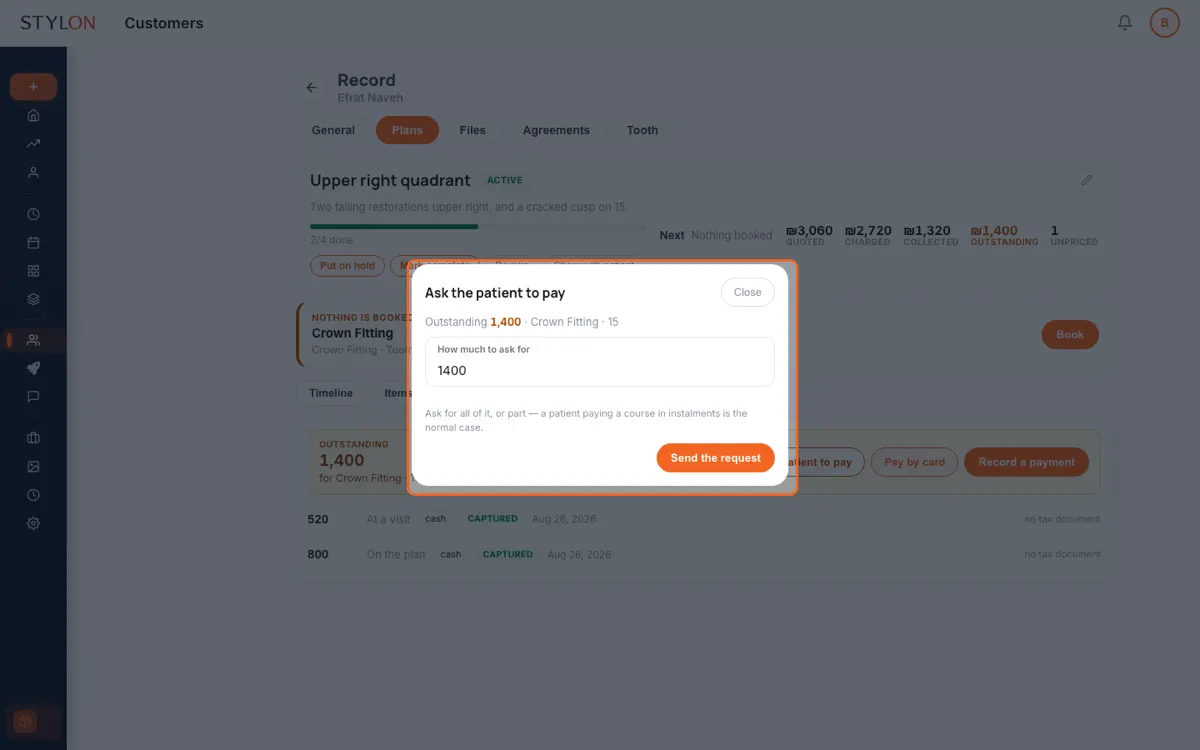
Track what the plan costs against what has been paid, item by item
Key Benefits
In detail
An item is a piece of work, not a line of prose
Each item has its own title, its own due window and its own target — a tooth, an area, a service. That is what lets a plan be booked from directly, and what lets you answer "what is left" without re-reading a paragraph and interpreting it.
Money is part of the plan, not a parallel document
A course of treatment has a total, some of it is invoiced, and some of that is paid. Holding those three numbers on the plan itself is the difference between telling a client where they stand and promising to check and call them back.
Stages hold their order
Some work cannot happen until earlier work is done, and a plan that ignores that produces bookings that have to be undone. Staged items keep their sequence, so what gets offered next is what can actually be done next.
From inside Stylon
What's included
- Titled plan items
- Own title, due window, and a tooth, area or service target.
- Plan money
- Total, invoiced and outstanding, held on the plan itself.
- Staged sequences
- Later stages wait for earlier ones, so bookings stay possible.
Frequently Asked Questions
Yes. An item can target a tooth from the chart or an area from the body map. That makes the plan specific enough to book from, and specific enough to check against afterwards.
It does. A plan carries its total, what has been invoiced, and what remains outstanding. A course of treatment does not need a separate spreadsheet to answer "how much of this is paid for".
You can share a plan with the client, and you control what it shows. Discussing a course of treatment goes considerably better when both sides are looking at the same list.
How to Use: Treatment Plans
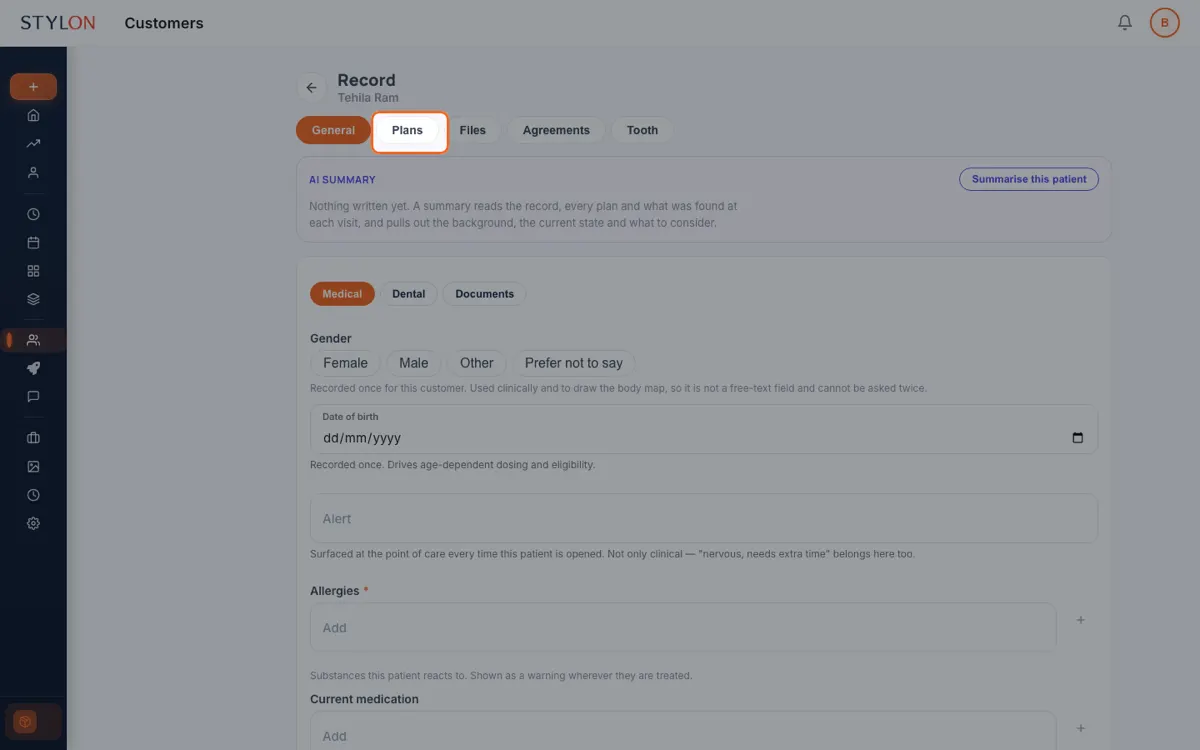
Clients → the client → Record → Plans → New plan.
Give each item a title, a due window, and a tooth or area if it has one.
Price each item. The plan totals them and tracks what has been paid.
Turn an item into an appointment straight from the plan.
Send the plan to the client so they can see the course and the cost.
Related features
Ready to get started?
Join businesses already running smarter with Stylon. No credit card required.
Start Now